What an Aerodynamic Stall Is: Angle of Attack Explained
A stall is a sudden loss of lift when a wing's angle of attack gets too high. It is not an engine failure, and it can happen at any speed.
In this article
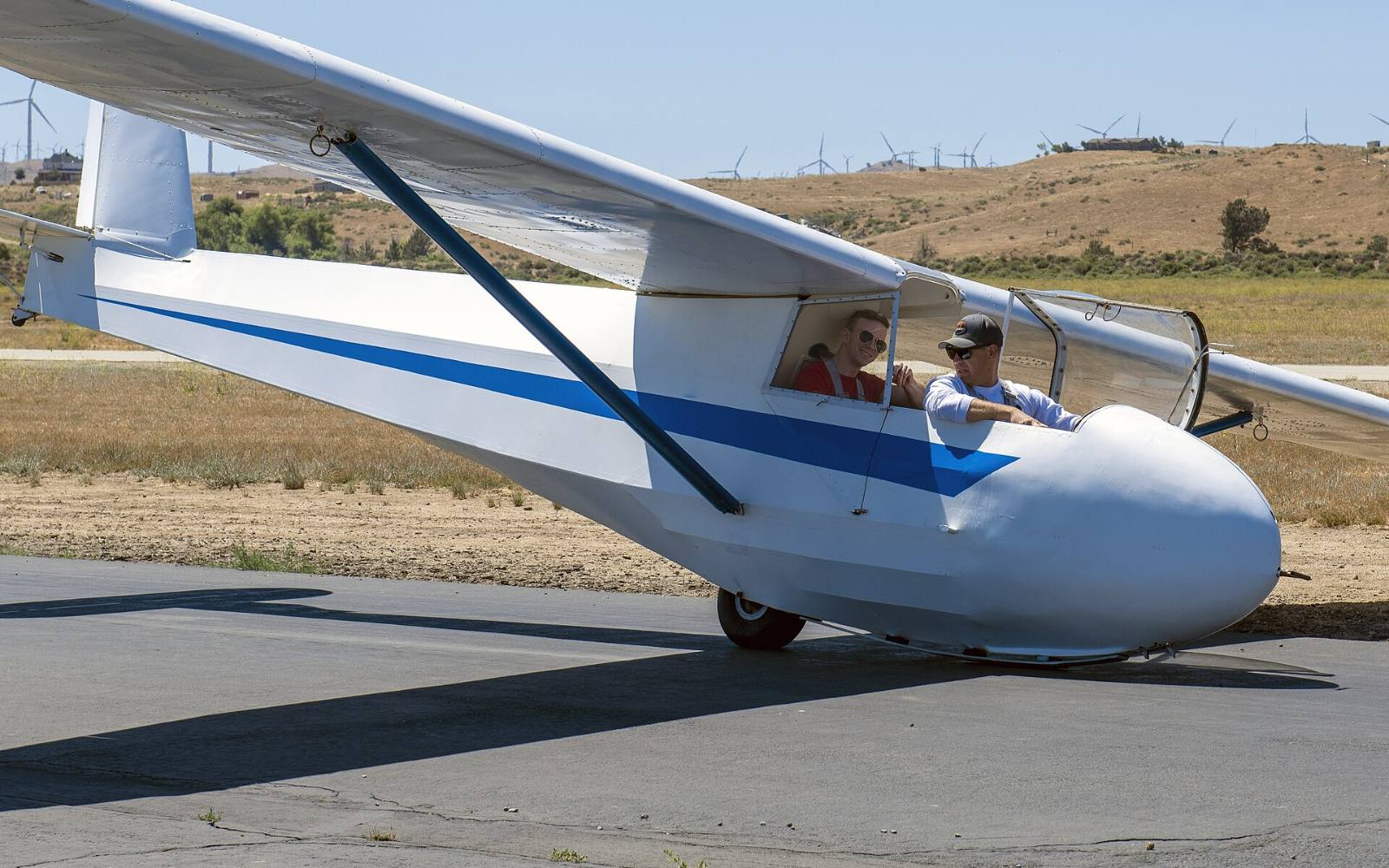
An aerodynamic stall is a sudden drop in lift that happens when a wing is tilted too steeply into the airflow. It has nothing to do with an engine stopping. Wikipedia states plainly that a stall does not mean the engines have stopped working, and notes that gliders, which have no engine, also stall. What matters is the wing's angle, not the aircraft's speed alone.
What angle of attack means
NASA's Glenn Research Center defines angle of attack as the angle between the wing's chord line (an imaginary line from the front edge to the back edge) and the direction the aircraft is moving through the air. This angle strongly affects how much lift the wing makes.
For small angles, roughly within 10 degrees either way, NASA says lift changes almost in a straight line with the angle. Tilt the wing up a little more and you get a little more lift. A pilot raises the nose on take-off for just this reason, to increase the angle and make extra lift.
Why lift suddenly falls
The straight-line rule does not continue forever. At higher angles the air can no longer follow the curve of the wing's upper surface. It separates from the wing and becomes turbulent. NASA explains that this separation of the boundary layer, the thin layer of air next to the surface, is why wings lose lift abruptly at high inclination.
Wikipedia gives a typical critical angle of about 8 to 20 degrees for subsonic wing sections. It varies with the wing shape. NASA adds that the exact stall point is hard to predict by calculation, so engineers usually find it through wind tunnel tests.
Stall speed is a result, not a cause
Because a stall depends on the angle, a wing can stall at any speed. Wikipedia defines stall speed as the speed at which the critical angle is reached in a given set-up, such as a particular weight and flap setting. A heavier load or a steep turn needs more lift, so a higher angle is needed and the stall speed rises. The article says that higher load factors, such as in steep turns, raise the stall speed.
Recovering from a stall
The cure follows from the cause. Wikipedia says that lowering the nose reduces the angle of attack and lets smooth airflow return. It adds that a properly handled stall typically costs only about 20 to 30 metres of height. Pilots train for this under supervision, and this article is general information, not flight instruction.
Related hazards
- Spin: can develop when one wing stalls before the other.
- Deep stall: can lock an aircraft in a condition it cannot recover from, typically one with a T-tail and rear-mounted engines.
- Tip stall: on swept wings, this can cause a dangerous nose pitch-up.
Devices that help
Wikipedia lists several safety devices: stall warning horns, stick shakers and stick pushers, stall strips, vortex generators, washout (a built-in twist in the wing) and angle-of-attack indicators. Their job is to warn the crew or to make the wing stall in a gentler, more predictable way.
Stall versus spoilers
Stalls are normally unwanted, but spoilers deliberately break up the airflow to reduce lift. Wikipedia notes this difference.
Why wings differ
NASA notes that an airfoil with a non-symmetric shape still makes some lift at zero angle of attack, while a symmetric airfoil makes none at zero. So two wings can reach their stall at different angles and with different lift on the way. For thin airfoils at subsonic speeds, NASA gives the lift coefficient (a number describing how much lift a wing makes for its size and the air's speed) as approximately 2π times the angle in radians, a rule that holds before the stall and not after it.
Past the stall point, NASA says the flow becomes highly unsteady and the lift can change rapidly. For that reason lift charts are normally left blank beyond the stall: the behaviour is hard to describe by a simple line. This also explains why the stall warning devices matter. They tell the crew that the angle is approaching its limit before the wing gives up its lift.
Sources
Image credits: Cover photo: Schweizer SGS 2-33 glider at Mountain Valley Airport, Tehachapi by Giancarlo Casem, Public domain. Pictures from Wikimedia Commons.

Share
Keep reading
Related articles
How Winglets Cut Drag at the Wingtip
Winglets are upturned wingtips that weaken the swirling vortex at the tip of a wing, cutting induced drag. Here is how they work, where they came from and what savings are claimed.
How Airplanes Stay in the Air: The Four Forces of Flight
Every flight comes down to four forces: lift, weight, thrust and drag. See what each one does, how pilots change the balance for takeoff, cruising and landing, and why engines do not lift the plane.
How a Turboprop Engine Turns a Jet Core Into Propeller Power
A turboprop is a gas turbine that spends nearly all its energy spinning a propeller through a gearbox. Here is how it works and why short routes use it.