The Volkswagen Beetle: A People's Car's 65-Year Run
The Beetle began as a 1930s German plan for a cheap family car and ended in Mexico in 2003 after about 21.5 million were built. Here is the story, with the disputes noted.
In this article
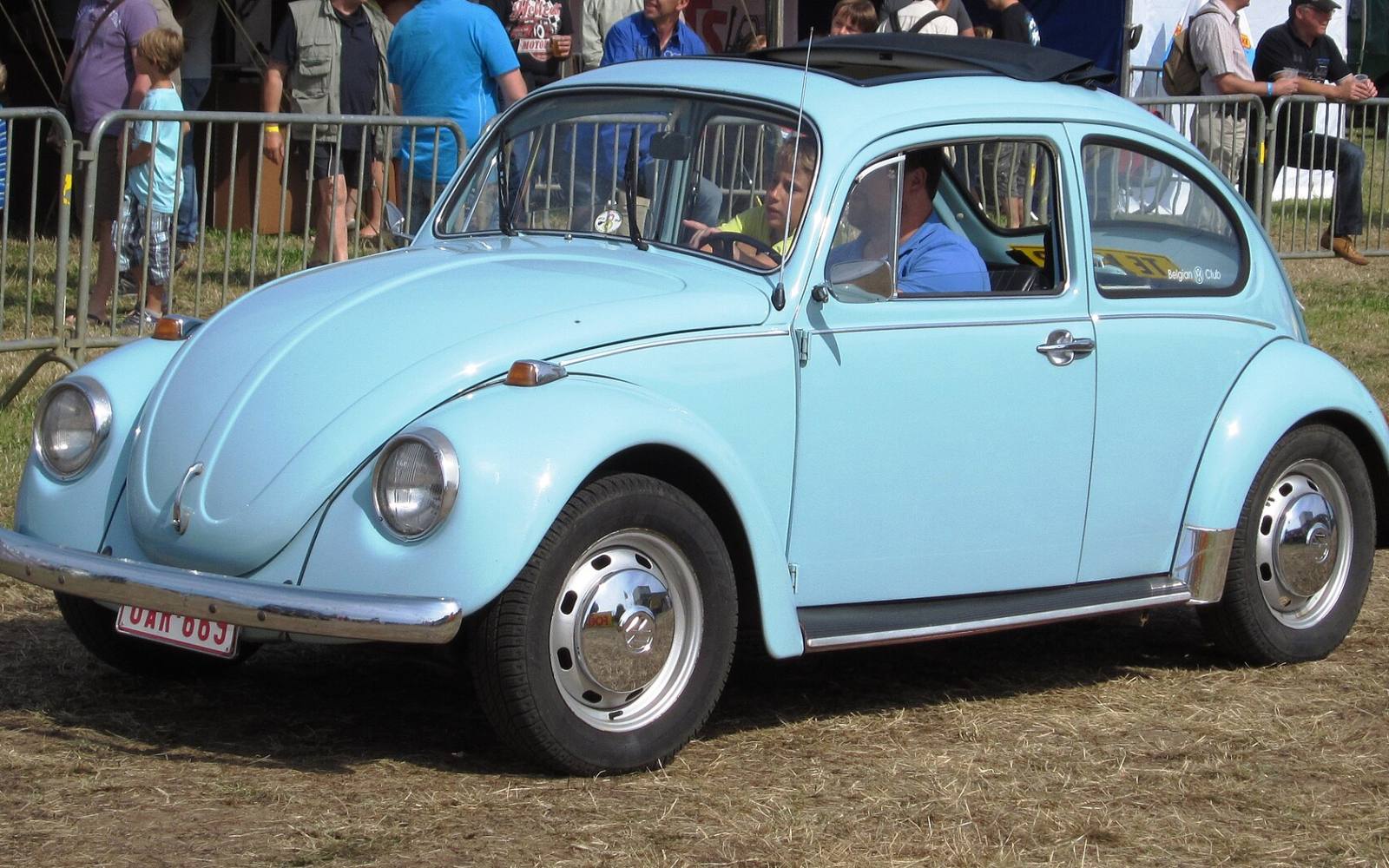
The Volkswagen Beetle, officially the Type 1, was built from 1938 to 2003 and about 21.5 million were made, the most of any car on a single platform. It started as a German government plan for an affordable people's car, survived the Second World War, and ended its run in Puebla, Mexico. Some details of its origin are disputed, and this article says where.
A car for the new motorways
Wikipedia says the car was conceived in the early 1930s, when Adolf Hitler wanted an inexpensive people's car for Germany's new Reichsautobahn road network. Ferdinand Porsche received a development contract on 22 June 1934, and the project was first called Type 60.
Who deserves credit is argued over. The Wikipedia article credits Porsche's team but also names Bela Barenyi, Hans Ledwinka, Josef Ganz and Paul Jaray as influences, and mentions a 1953 court ruling that recognised Barenyi's claims. A Goodwood article says Barenyi, a Hungarian engineering student, conceived the basic layout in 1925 but did not patent it, and that Ganz was dismissed from the project because he was Jewish. Wikipedia itself is not consistent on how far ahead of Porsche Barenyi was, giving both "almost ten years" and "more than five years".
The design
The Beetle had its engine at the back: an air-cooled, four-cylinder boxer engine, in which the cylinders lie flat and face each other in pairs. It was rear-wheel drive with a two-door body, and Wikipedia gives a drag coefficient of 0.48. Air cooling meant no radiator or coolant, which kept the design simple.
Goodwood lists the prototype stages: the Type 12 with Zundapp in 1931 or 1932, the Type 32 with NSU in 1933, and pilot batches built by Mercedes-Benz, 30 cars of the Type 30 in 1937 and 60 of the Type 60 in 1938.
The factory and the savers
The foundation stone of the Wolfsburg factory was laid on 26 May 1938. The car was presented under the Kraft durch Freude (Strength Through Joy) scheme, and Germans bought savings stamps towards one. Goodwood says more than 337,000 people saved and none received a car, because war began and the plant switched to military vehicles.
Restart after 1945
Wolfsburg fell in the British occupation zone. Goodwood says Major Ivan Hirst led the British command there, and that his team assembled 1,785 vehicles in 1945, with the British ordering a further 20,000 that September. Wikipedia gives 27 December 1945 as the start of series production.
The two articles give different early counts. Wikipedia mentions 1,785 built by the end of 1945 and also says only 55 vehicles came off the line in 1945 after series production began, without reconciling the numbers. The likely reason is different ways of counting, but the sources do not say.
The name KdF was dropped in favour of Volkswagen. Goodwood says full-strength production began in 1949, when control passed to the West German government. Ferdinand Porsche's first car under his own name, the Porsche 356, used the Beetle's chassis and rear air-cooled mechanical parts.
Milestones
- August 1955: the first million Type 1 cars built (Goodwood)
- 17 February 1972: the 15,007,034th Beetle was built, passing the Ford Model T's total (Wikipedia and Goodwood)
- 1 July 1974: the last Beetle built at Wolfsburg (Wikipedia)
- 19 January 1978: the last European saloon, from Emden (Wikipedia)
- 30 July 2003: the last Type 1, in Puebla, Mexico (Wikipedia)
Goodwood notes that German saloon production ended in 1977, while Wikipedia says the last Emden sedan was in January 1978. Goodwood adds that Karmann built the last convertibles until 1979. These dates differ by source and by what is counted as the last car.
How many were built
Wikipedia gives a worldwide total of 21,529,464 and says Wolfsburg alone built 11,916,519. A web search for the total also turns up 21,529,564, so sources differ in the last digits. A figure of about 21.5 million is safe.
Even the length of the run is given two ways: Goodwood describes both "more than 60 years" and a "65-year career". From 1938 to 2003 is 65 years, though series production only started in 1945.
Why it matters
The Beetle showed that a small, simple, cheap car could sell for decades with limited change, and it was built on several continents. Its record against the Model T made it the best-selling single-platform car. It also carries a history that is hard to separate from the politics of its birth, which is why historians keep arguing over who designed it and under what scheme it was first sold.
Sources
Image credits: Cover photo: VW Type 1 aka Beetle late 1960s Schaffen-Diest 2012 by Charles01, CC BY-SA 3.0. Pictures from Wikimedia Commons.

Share
Keep reading
Related articles
The Wright Brothers' First Flights, 17 December 1903
On 17 December 1903 Orville and Wilbur Wright made four powered flights at Kitty Hawk. The longest was 852 feet in 59 seconds.
Concorde: How the Supersonic Airliner Flew and Why It Ended
Concorde carried passengers at about twice the speed of sound from 1976 to 2003. Here is the short story of how it began, what it did and why it was retired.
How Ford's Assembly Line Cut Model T Build Time
In 1913 Ford moved cars past workers instead of workers around cars. Build time for one Model T fell from 12 and a half hours to 93 minutes, and the price fell with it. Here is how it happened.