OLED vs LCD: How Each Screen Makes Light and Black
An OLED pixel makes its own light, while an LCD pixel filters light from a backlight. That one difference explains black levels, thickness, power use and burn-in.
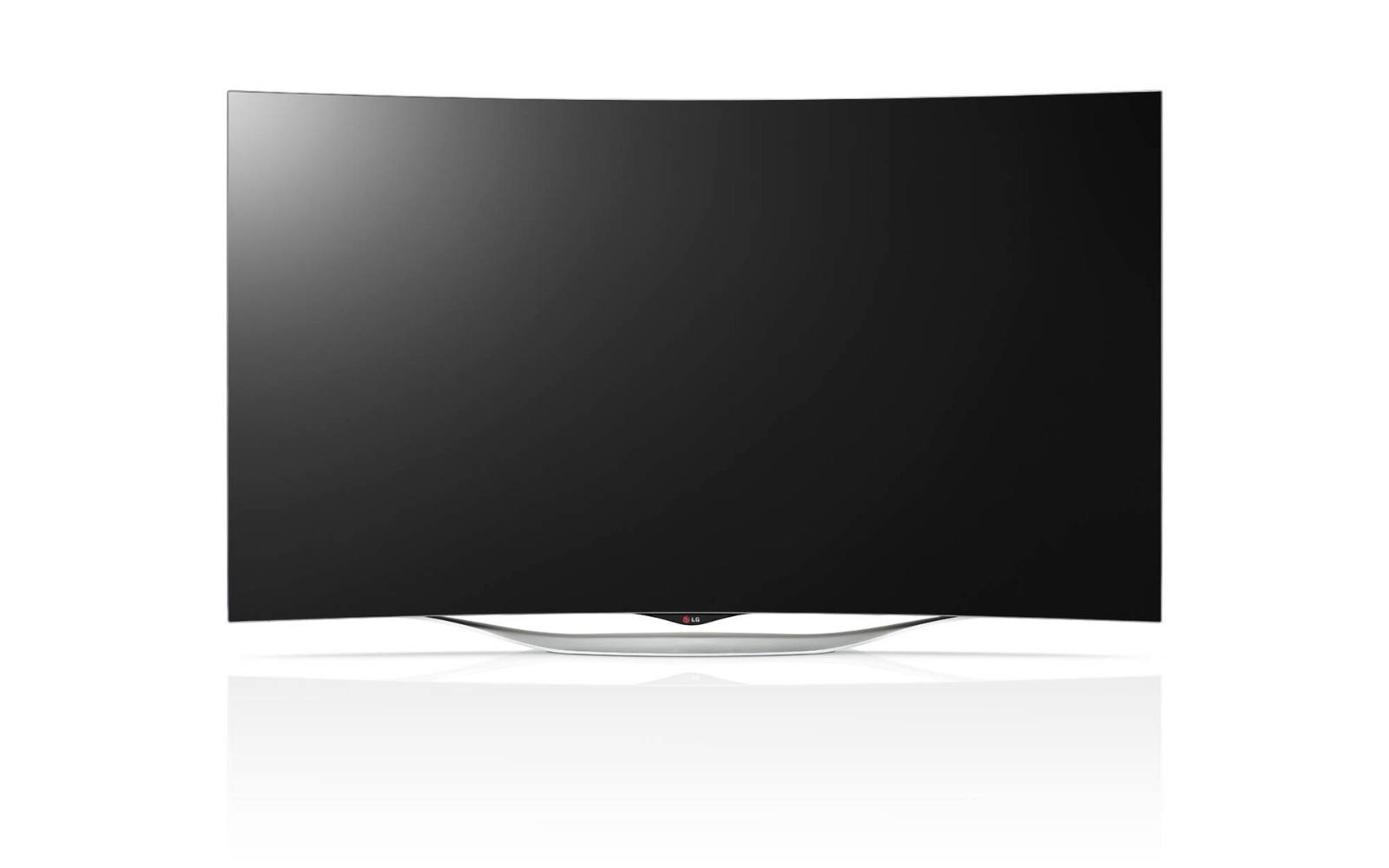
In this article
The main difference between OLED and LCD screens is where the light comes from. In an OLED, each tiny dot of the picture produces its own light. In an LCD, a single backlight shines through the screen and the dots only block or pass that light. Most of the other differences people talk about, such as deeper blacks, thinner panels and the risk of burn-in, follow from that.
How an LCD makes a picture
An LCD, or liquid crystal display, has a light source behind the panel. In front of it sit layers including liquid crystals, whose arrangement changes when a small voltage is applied. Depending on how the crystals are turned, more or less of the backlight gets through, and coloured filters over each dot give red, green and blue. The crystals do not make light. They act like tiny adjustable shutters.
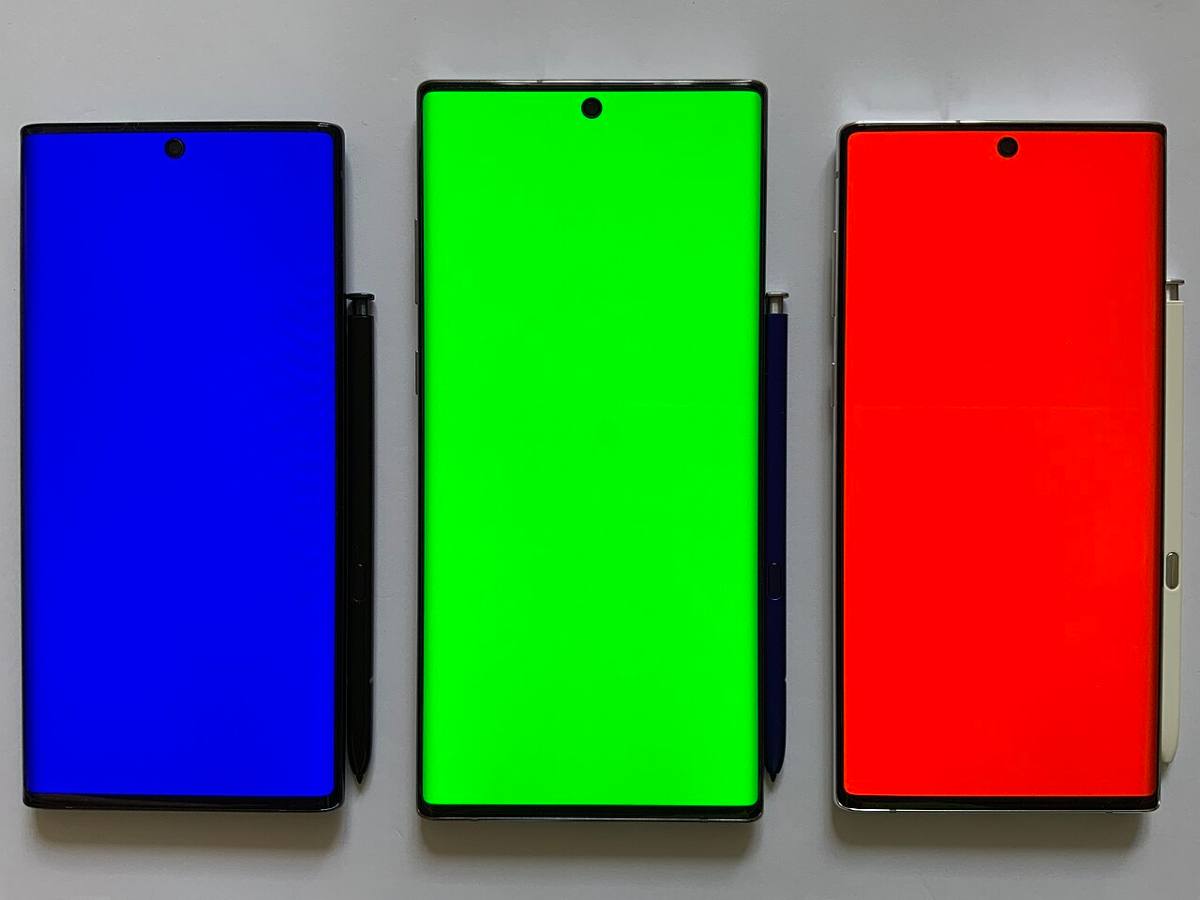
Because the backlight is on, some light leaks through even when a pixel is set to black. Wikipedia's article on OLED says LCDs cannot show true black for this reason: the backlight is always filtering through the crystals.
How an OLED makes a picture
OLED stands for organic light-emitting diode. Here "organic" means the light-emitting material is a carbon-based compound. The display maker Newhaven Display describes the basic structure: an electrode that supplies electrons (the cathode), a transparent electrode (the anode, often indium tin oxide), and layers of organic material between them, including an emissive layer. When electricity flows, electrons and positive charges called holes meet in the organic layer and release energy as light. This effect is called electroluminescence. The colour depends on the material used.
No backlight is needed, because the pixels glow by themselves. A pixel that is switched off gives no light and uses no power, according to Wikipedia. That is how an OLED can show true black, and why the contrast between dark and bright parts can be very high.
Side-by-side differences
- Black level: OLED pixels can switch off completely. LCDs always pass a little backlight.
- Thickness and weight: with no backlight layer, OLED panels can be thinner and lighter, and can be made on flexible plastic, says Wikipedia.
- Power use: dark pictures use less power on an OLED, since dark pixels are off. Newhaven Display adds that power use rises with white backgrounds.
- Brightness: Newhaven Display notes that it is harder to raise brightness on an OLED than on an LCD, and that readability can suffer in direct sunlight.
- Lifespan and burn-in: organic materials wear out as they are used.
Burn-in and ageing
Wikipedia says OLEDs may be more susceptible to screen burn-in and loss of brightness than LCDs. Burn-in means a faint ghost of an image that was shown for a long time, such as a logo or a menu bar. The cause is that the organic material in the frequently lit pixels ages faster than the pixels around them. Blue-emitting materials have historically degraded fastest. Wikipedia cites a 2008 report in which blue luminance fell by 12% after 1,000 hours.
Lifetimes have improved. The same article reports that LG gave an expected lifetime of 100,000 hours in 2016, compared with 36,000 hours in 2013. These are manufacturer figures under test conditions, and real-world results depend on brightness settings and what is shown on the screen.
A short history
According to Wikipedia, French researchers at the University of Nancy first saw electroluminescence in organic materials in the early 1950s. In 1987, Ching Wan Tang and Steven Van Slyke at Eastman Kodak built the first practical OLED device. Pioneer began commercial OLED production in 1997, starting with a car stereo display. Sony's XEL-1 in 2007 is listed as the first OLED television.
Which one is it in a product?
Phone and television makers often name the technology in specifications. Some products marketed as LED are actually LCDs with an LED backlight, so "LED" tells you about the backlight, not the pixels. The word OLED, or AMOLED on many phones, indicates self-lit pixels.
In short, LCDs filter a constant light, and OLEDs create light where it is needed. That is why OLEDs excel at black levels and thinness, while LCDs can go brighter and avoid the same kind of ageing.
Sources
Image credits: Cover photo: LG OLED TV by LG Electronics, CC BY 2.0; Picture in the text: Samsung AMOLED by 嘉傑, CC BY-SA 4.0. Pictures from Wikimedia Commons.


Share
Keep reading
Related articles

How Noise-Cancelling Headphones Work
Active noise cancelling plays a sound that opposes the noise around you. See why it suits engine hum, why speech still gets through, and where it began.

How USB-C Chargers Decide How Much Power to Send
USB Power Delivery lets a charger and a device agree on the power they need. See how the negotiation works, what the 100 W and 240 W limits mean, and why the cable matters.