How Noise-Cancelling Headphones Work
Active noise cancelling plays a sound that opposes the noise around you. See why it suits engine hum, why speech still gets through, and where it began.
In this article
Noise-cancelling headphones listen to the sound around you and play a mirror-image sound that cancels part of it near your ear. The method is called active noise control. It works best on steady, low-pitched noise such as engine rumble, and less well on sudden or high-pitched sounds.
Sound is a wave, and waves can cancel
Sound is a pressure wave in air. According to Wikipedia, a noise-cancellation speaker emits a wave with the same amplitude but inverted phase. When the two waves meet, they cancel each other, which is called destructive interference. If the original wave is pushing at a point, the anti-noise wave is pulling, and the sum is close to zero.
The loop inside the headphones
FreeCodeCamp describes the system as a real-time loop. Microphones pick up noise, a digital controller works out the cancelling signal, and the speaker plays it. The loop keeps adjusting as conditions change.
Timing is critical. The delay in processing is tiny, but if the anti-noise arrives late, it cannot cancel the original wave properly. The cancellation also happens only in a small zone near the ear canal, not across the room.
Feedforward, feedback and hybrid
FreeCodeCamp lists three designs:
- Feedforward uses a microphone on the outside of the ear cup. It gets a head start on incoming noise but must estimate how long the sound takes to reach the ear.
- Feedback uses a microphone inside the cup to measure what is left and correct it. It cannot anticipate sudden sounds as well.
- Hybrid combines both.
Some headphones refine their settings continuously with an adaptive method such as FxLMS, a common algorithm for this job, while others switch between filters prepared in advance.
Where it works and where it does not
Wikipedia says active control works best at low frequencies, and that above about 1,000 hertz the cancelling and reinforcing of sound waves in three-dimensional space becomes unpredictable. Periodic noise, such as engine or propeller noise, is easier to cancel than random noise.
FreeCodeCamp agrees: steady, low-frequency sounds are handled well, while sudden or high-frequency sounds, like claps or speech, are harder. So headphones that cancel an aircraft's drone can still let a conversation through.
Passive isolation helps
Cancelling is only half the design. The ear cups, seals and foam tips also block sound physically, and they are more effective at higher pitches. Wikipedia notes that insulation and mufflers are often enough at higher frequencies. Together, the passive and active parts cover more of the sound range. A broken seal or head movement changes the acoustic path and can reduce the effect unless the system adapts.
A short history
Wikipedia traces the idea to Paul Lueg, who received US patent 2,043,416 in 1936 for cancelling tones in ducts and near loudspeakers. In the 1950s, Lawrence J. Fogel patented systems to cancel noise in helicopter and aeroplane cockpits. In 1957, Willard Meeker built a working active earmuff, with a bandwidth of roughly 50 to 500 hertz and about 20 decibels of maximum reduction. The first commercial active noise reduction headsets appeared in the late 1980s.
Why the placement of the speaker matters
Wikipedia explains that where the cancelling speaker sits decides how much power it needs. A speaker placed near the noise source must match that source's power, which is hard for something like a factory fan. A speaker right at the listener's ear needs far less power, but it helps only one person. That trade-off is why headphones are such a natural fit: the speaker is already a few millimetres from the ear canal, and only that small zone has to be quiet.
The same idea of using microphones as a noise reference appears in phones. Wikipedia notes that in mobile phones the microphones farthest from the mouth capture the background noise, and the signal is processed to remove it from the speech. That is noise removal on a call, not anti-noise played into the ear, but it uses the same principle of knowing what the noise looks like.
Does it make listening easier?
FreeCodeCamp reports a 2012 study in which people using active noise cancelling in background noise chose listening levels up to 4 decibels lower than with ordinary earbuds. It is one result, and not a promise for every user or product.
Sources
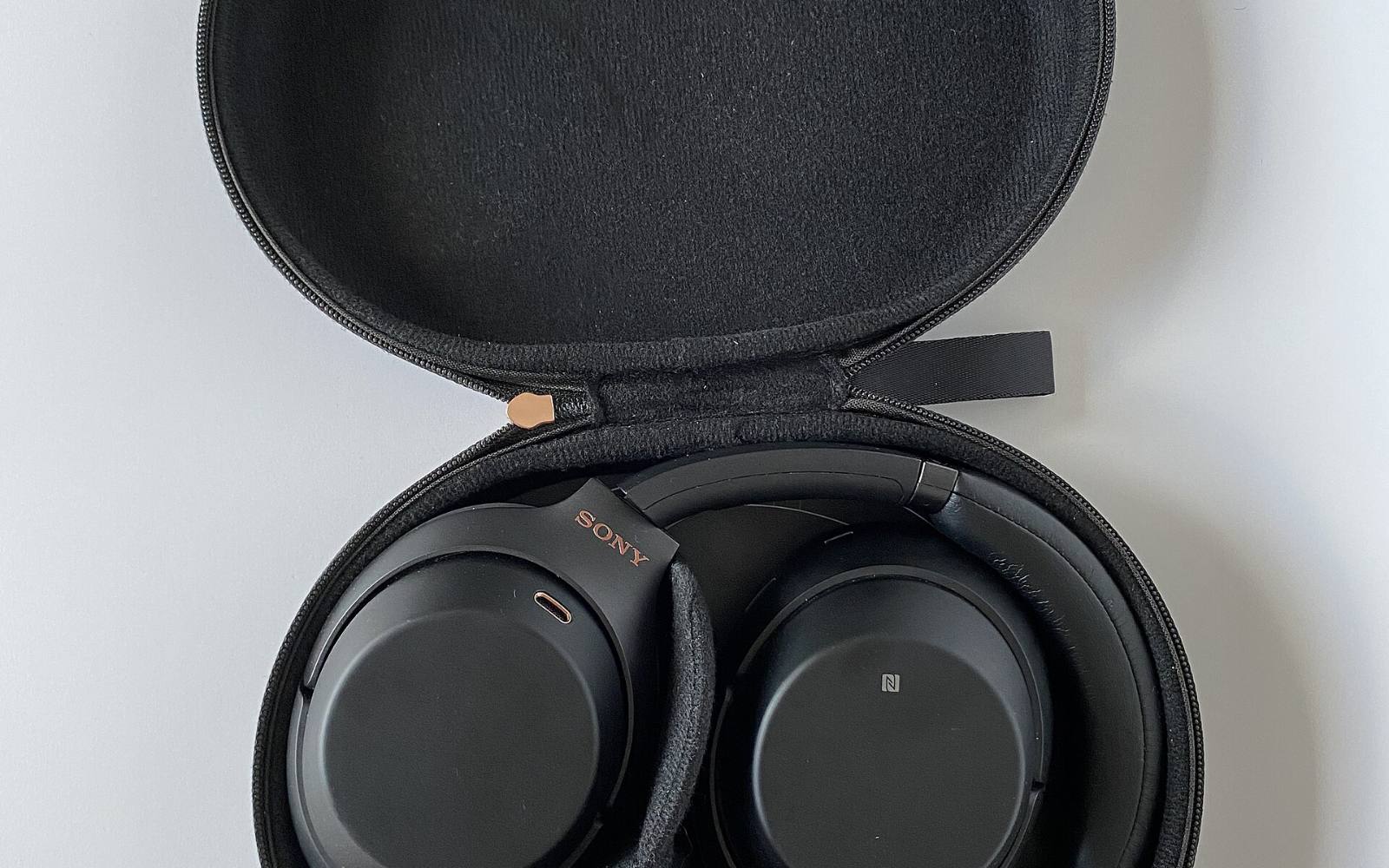
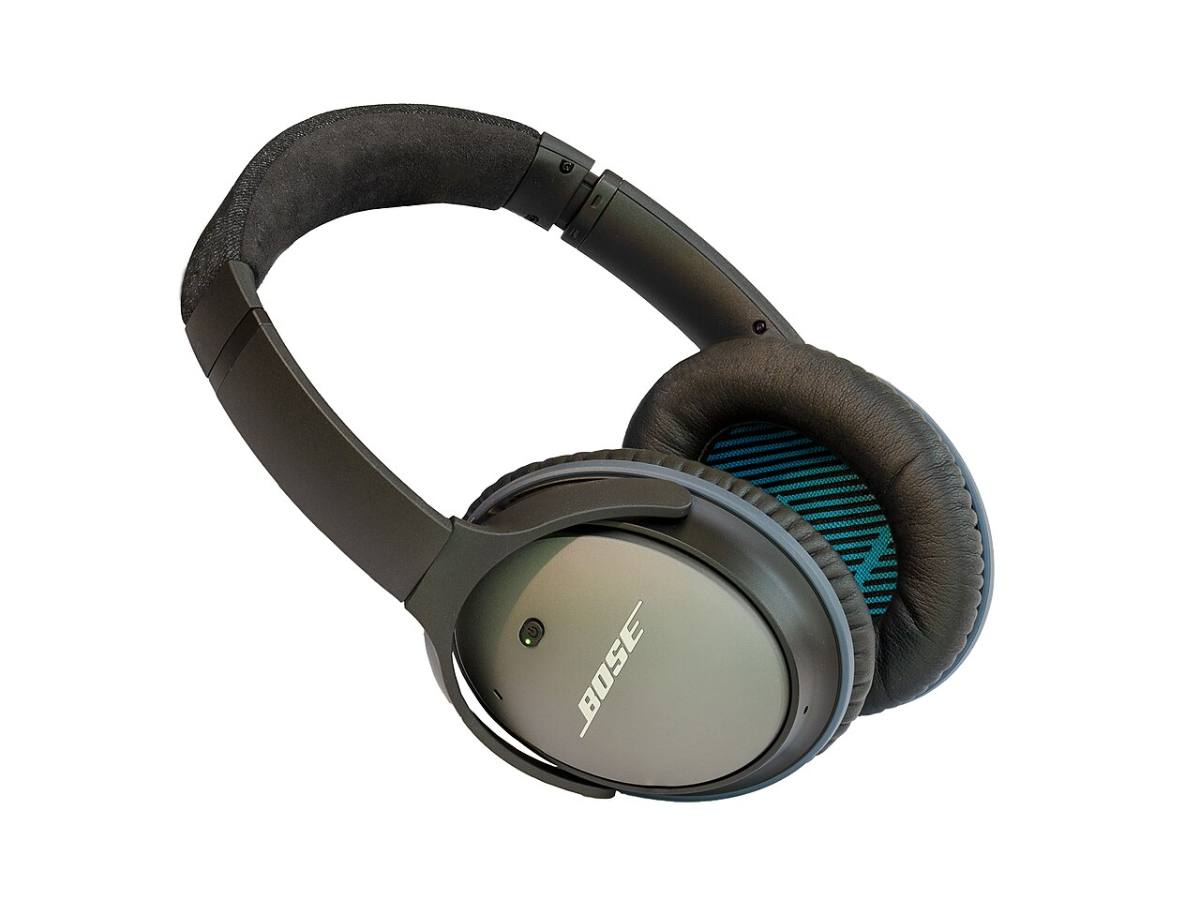
Image credits: Cover photo: Sony-WH-1000XM3-kabellose-Bluetooth-Noise-Cancelling-Kopfhoerer by www.digitalpush.net, CC BY 4.0; Picture in the text: Bose QuietComfort 25 Acoustic Noise Cancelling Headphones by Florian Fuchs, CC BY-SA 3.0. Pictures from Wikimedia Commons.


Share
Keep reading
Related articles
OLED vs LCD: How Each Screen Makes Light and Black
An OLED pixel makes its own light, while an LCD pixel filters light from a backlight. That one difference explains black levels, thickness, power use and burn-in.
How USB-C Chargers Decide How Much Power to Send
USB Power Delivery lets a charger and a device agree on the power they need. See how the negotiation works, what the 100 W and 240 W limits mean, and why the cable matters.