How Bicycle Gears Work: Chainrings, Cogs and Derailleurs
Bicycle gears change how far you travel per pedal turn. See how chainrings, cogs and derailleurs work, how a gear ratio is worked out, and what cross-chaining is.
In this article
Bicycle gears let you choose how hard each pedal turn is and how far it moves you. A low gear means easy pedalling and slow progress, which suits hills. A high gear means harder pedalling and more distance per turn, which suits flat roads and downhills. The chain connects toothed wheels at the pedals and at the rear wheel, and the gear you are in depends on which two toothed wheels it joins.
The parts
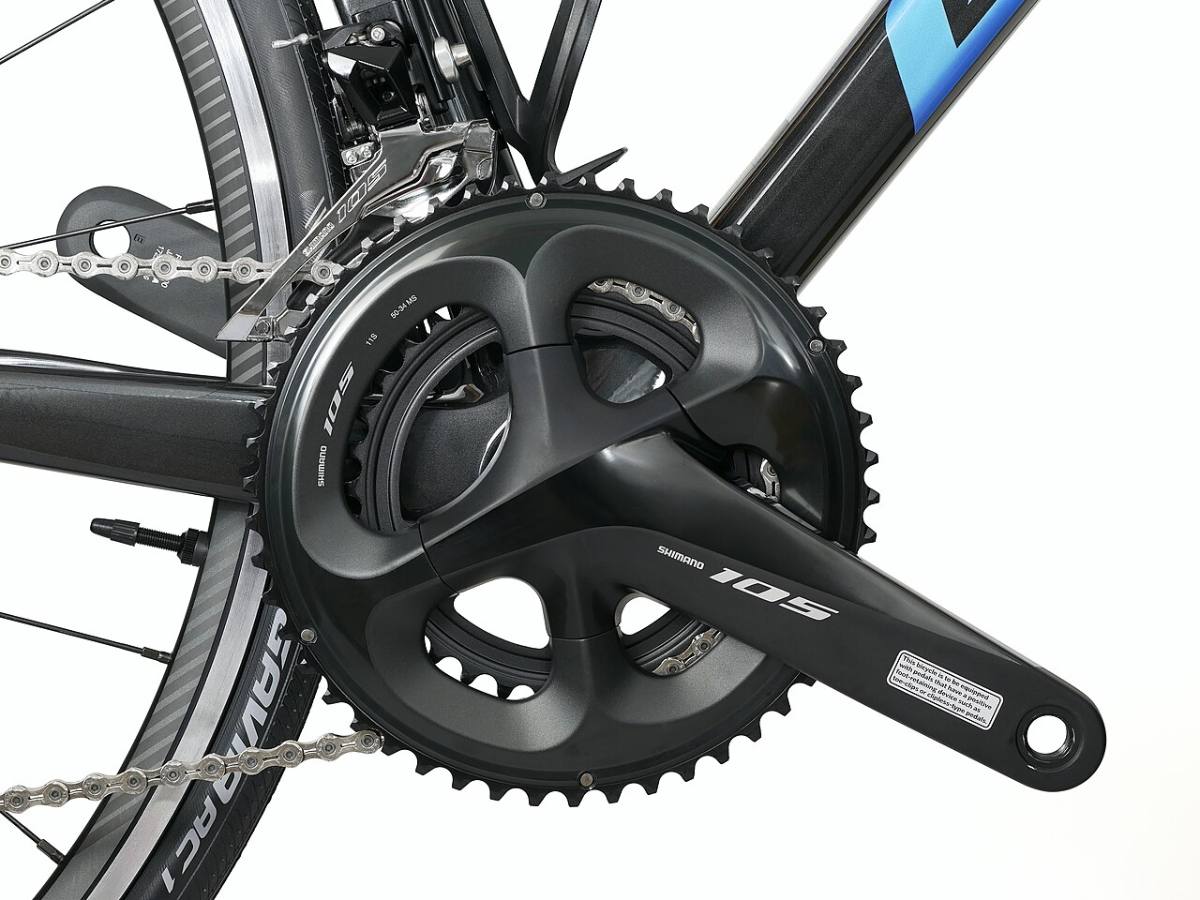
- Chainring: a toothed wheel at the pedals. Bikes can have one, two or three.
- Sprockets or cogs: the toothed wheels on the rear hub, usually in a group called a cassette.
- Chain: joins one chainring to one rear sprocket.
- Derailleurs and shifters: the derailleurs move the chain between sprockets or chainrings when you operate the shifters.
Wikipedia's article on bicycle gearing says bikes with derailleurs may have up to four chainrings and typically five to twelve rear sprockets.
How a gear ratio works
The gear ratio compares the teeth on the front chainring with the teeth on the rear sprocket. Divide front by rear. With a chainring of 48 teeth and a sprocket of 16, the ratio is 3: the rear wheel turns three times for each turn of the pedals. With 34 teeth at the front and 27 at the back, the ratio is about 1.26, which feels much easier.
Cyclists also use gear inches, defined on Wikipedia as the wheel diameter in inches multiplied by the front teeth divided by the rear teeth, usually rounded to a whole number. A 26-inch wheel in a 3 to 1 ratio gives 78 gear inches. A bigger number means a harder gear. Wikipedia also mentions metres of development, the distance travelled per pedal turn, which you can estimate by multiplying gear inches by about 0.08.
How a derailleur shifts
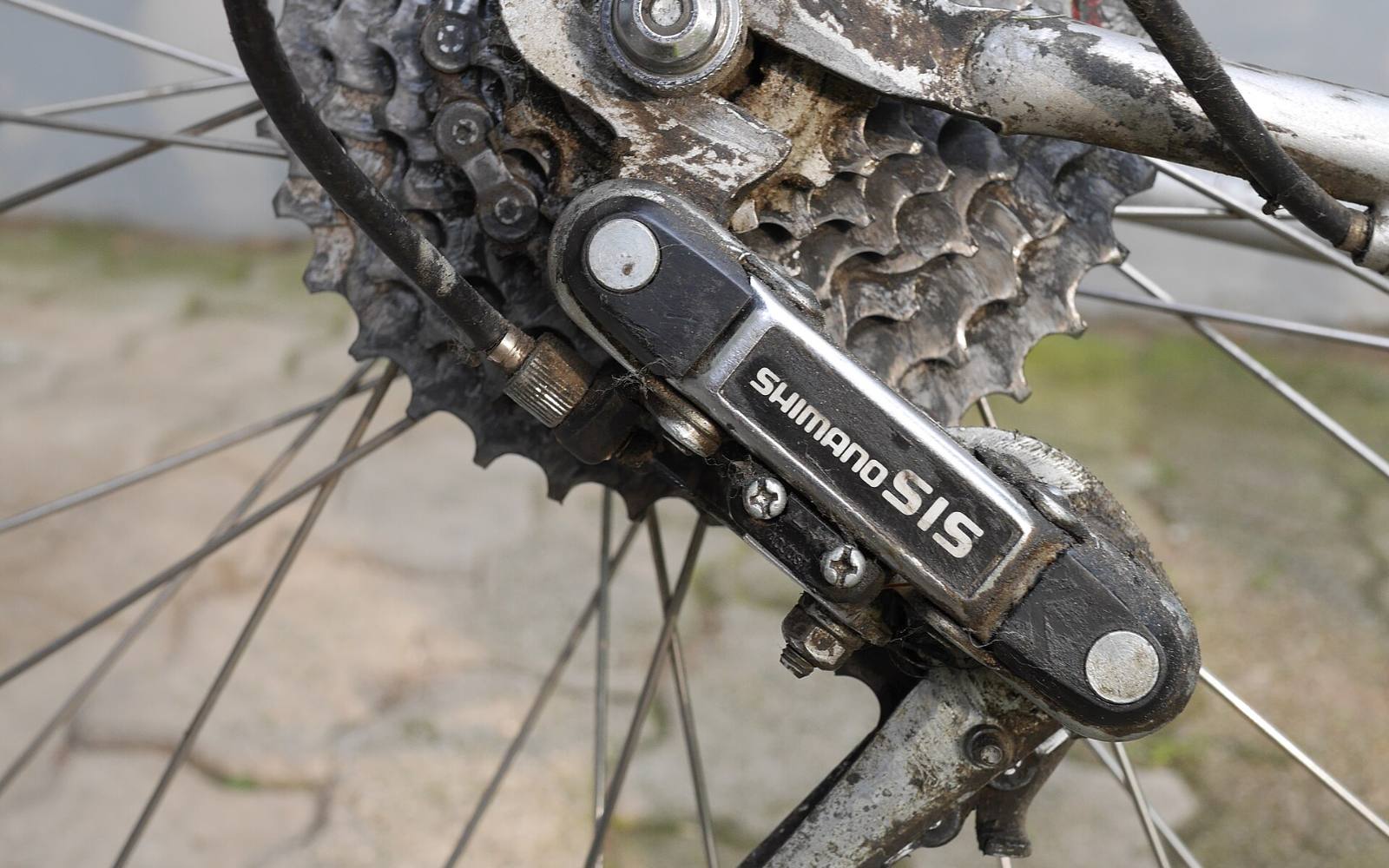
Sheldon Brown, a respected bicycle writer whose site is a long-standing reference, explains the two derailleurs. The front derailleur is a simple guide that pushes the chain sideways between chainrings. The rear derailleur moves the chain across the rear sprockets and also holds the spring and small pulleys that keep the chain tight as it moves between large and small sprockets.
A cable runs from the shifter to the derailleur. Wikipedia says pulling it moves a chain guide that makes the chain "derail" onto a new sprocket. The chain can only change position while it is moving forward, so you need to keep pedalling while shifting. Brown notes that the rear derailleur shifts on the slack lower part of the chain, so it can usually shift under load, though easing off helps. The front derailleur works on the upper, power-carrying part of the chain, so front shifts work less well if you are pedalling very hard or very slowly.
Why "24 gears" is not 24 different gears
Wikipedia gives an example: three chainrings and eight sprockets are advertised as 24 gears. Some combinations are poor and many ratios overlap, so only about 22 are usable and typically 16 to 18 are distinct. The size of the jump between gears also varies. Wikipedia says racing bikes often step about 7% to 10% between gears, mountain and hybrid bikes are around 15%, and three-speed hubs about 33% to 37%.
Cross-chaining
Small chainrings pair with large sprockets for low gears, and large chainrings pair with small sprockets for high gears. Using the largest chainring with the largest sprocket, or the smallest with the smallest, makes the chain run at a sharp sideways angle. This is called cross-chaining. Wikipedia says it reduces efficiency and increases chain wear. Brown calls the small-front, small-rear case the worst, saying it is noisy, inefficient and causes the chain to wear out sooner.
Hub gears
Another design hides the gears inside the rear hub. Wikipedia explains that planetary gears inside the hub change the wheel speed relative to the sprocket. There is one chainring and one sprocket, the chain runs straight, and one shifter controls all speeds. Hubs range from 2 to 14 speeds. A three-speed hub has roughly a 180% range, the 14-speed Rohloff about 526%. Efficiency is close: Wikipedia lists derailleurs at 93% to 95% at 150 watts and 3-speed hubs at 92% to 95%.
In short, gears work by pairing a chainring and a sprocket with a ratio between them. Changing which pair the chain uses changes how far each pedal turn takes you.
Sources
Image credits: Cover photo: SHIMANO RD-TY20 rear derailleur, 1989.jpg) by Petar Milošević, CC BY-SA 4.0; Picture in the text: Bicycle crankset Shimano 105 R7000 chainring 50-34, length 172.5mm, 11.jpg) by Petar Milošević, CC BY-SA 4.0. Pictures from Wikimedia Commons.
Share
Keep reading
Related articles
How a Lift Stays Safe: Brakes, Governors and Rails
A lift has several independent safeguards: a counterweight, a spring-applied brake, an overspeed governor and a safety gear that grips the rails.
How a Refrigerator Cools: The Four-Part Cycle
A fridge does not make cold. It moves heat from inside to your kitchen using a compressor, condenser, expansion valve and evaporator.