How a Lift Stays Safe: Brakes, Governors and Rails
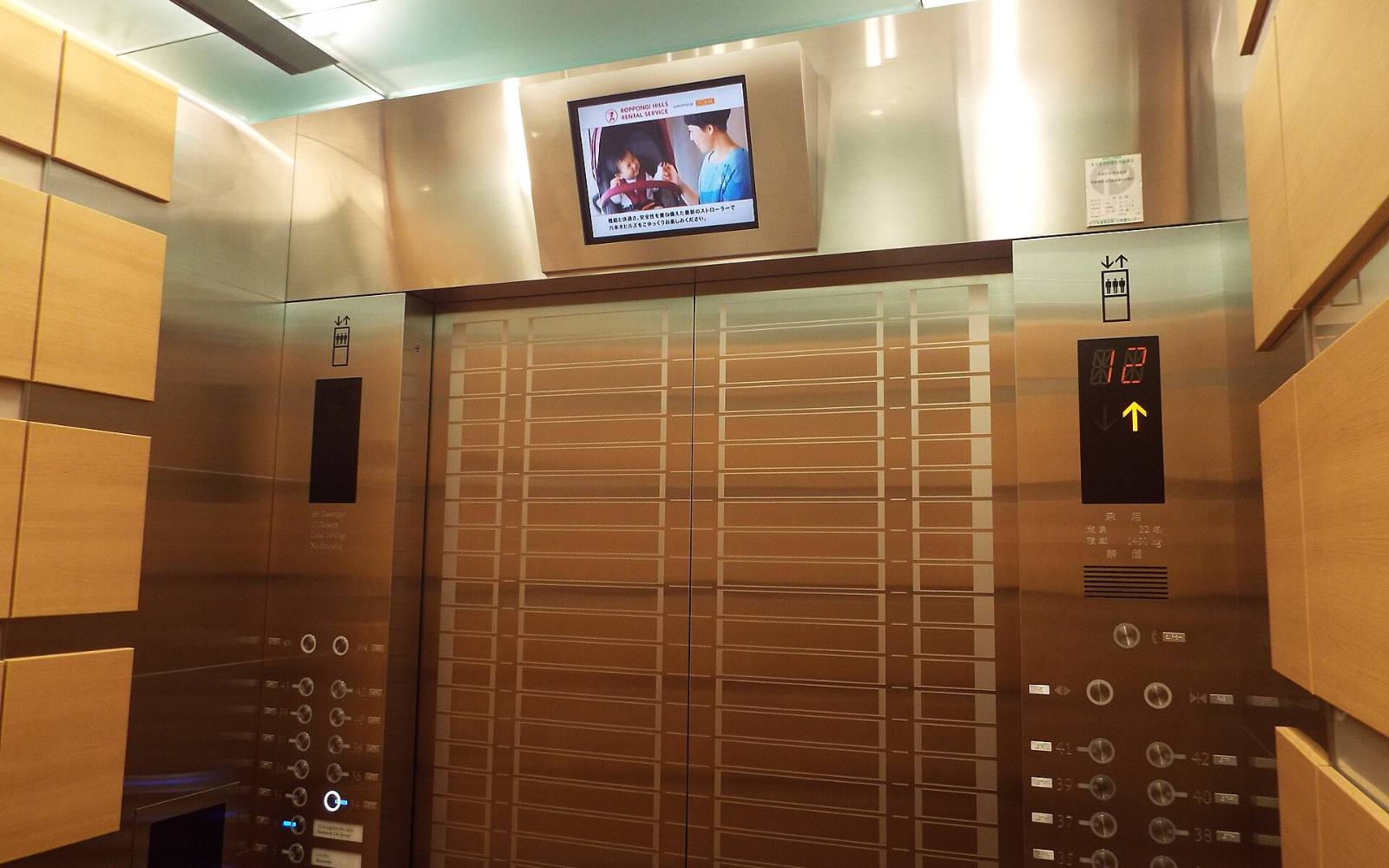
A lift has several independent safeguards: a counterweight, a spring-applied brake, an overspeed governor and a safety gear that grips the rails.
In this article
A passenger lift (elevator) stays safe because no single part is trusted alone. A counterweight lowers the load on the motor, a brake clamps shut if power is lost, and a separate speed monitor can trigger a grip on the guide rails. This article walks through those layers and the history behind them.
The basic traction lift
Most tall buildings use traction lifts. Steel or Kevlar ropes pass over a grooved drive wheel, called a sheave, and friction in the grooves provides the grip. Wikipedia says the number of ropes depends on the traction needed, not on the strength of a single rope.
The ropes carry the car on one side and a counterweight on the other. Wikipedia says it typically weighs the car plus 40 to 50 percent of the rated load. The motor then only has to move the difference, which cuts the power needed and keeps the car balanced.
A brake that fails safe
The main brake is applied by springs and held open electrically. That design means a power failure does not release it; it closes. This fail-safe approach, where the safe state is the one the system falls back to, appears throughout lift design.
The overspeed governor
A second layer watches speed. According to the lift equipment maker PFB, an overspeed governor detects abnormal speed in the car, and when its tripping speed is exceeded it sends a mechanical signal to the safety gear linkage. Because the signal is mechanical, it does not depend on the lift's electronics working.
The safety gear grips the rails
The safety gear is fixed to the car and straddles the steel guide rails that run the height of the shaft. PFB describes it as a roller-type brake that grips the rail and stops the car. It acts on the rails rather than on the ropes, so even a broken rope does not defeat it.
PFB describes two kinds:
- Instantaneous gear stops the car abruptly and is listed for rated speeds up to 0.63 metres per second.
- Progressive gear brakes gradually, which reduces the forces on the car and structure, and is listed for rated speeds up to 2.50 metres per second.
PFB says the European standard EN 81-20 requires the type to match the installation's rated speed and the car's rated load. It also says the gear normally needs no routine maintenance, but recommends a technician inspect it twice a year. These are the maker's figures, and local rules may differ.
Doors and the shaft
Another set of safeguards protects people from the shaft itself. Wikipedia explains that doors prevent riders from falling into, entering or tampering with anything in the shaft. In early manual lifts, interlocks made sure the inner and outer doors were closed before the car could move. Patents for automatic shaft doors followed, including Alexander Miles's in 1887 for doors that block access unless the car is present.
The history: Otis and the broken rope
Early lifts had a real fear attached to them: a snapped rope meant a fall. Elisha Otis introduced a safety lift in the early 1850s that held the platform if its cable broke. Wikipedia dates his public demonstration to 1854 at the New York Crystal Palace.
The New England Historical Society tells it this way: P.T. Barnum offered Otis $100 to demonstrate, and Otis rose on a platform high above a crowd while an assistant cut the cable with an axe. The platform dropped only about two feet, and he told the crowd, "All safe gentlemen, all safe." Sources differ on the details. That article gives both 1853 and 1854 for the event, and other accounts differ about whether it was an axe or a knife.
Both sources agree the first passenger installation was at 488 Broadway in New York. Wikipedia dates it to 23 March 1857. The New England Historical Society says Otis's sons had installed 2,000 Otis elevators within 11 years of his death in 1861.
Hydraulic lifts
Not all lifts use ropes over a sheave. Wikipedia says hydraulic lifts push the car up with a cylinder, and are common for buildings of two to five floors, sometimes up to six or eight, at speeds up to 1 metre per second. They are impractical for very tall buildings, where traction lifts are needed.
Sources
- Elevator, Wikipedia
- Lift safety gear: what it is, how it works and how to choose the right one, PFB
- Elisha Otis Gets a Sales Lesson From P.T. Barnum, New England Historical Society
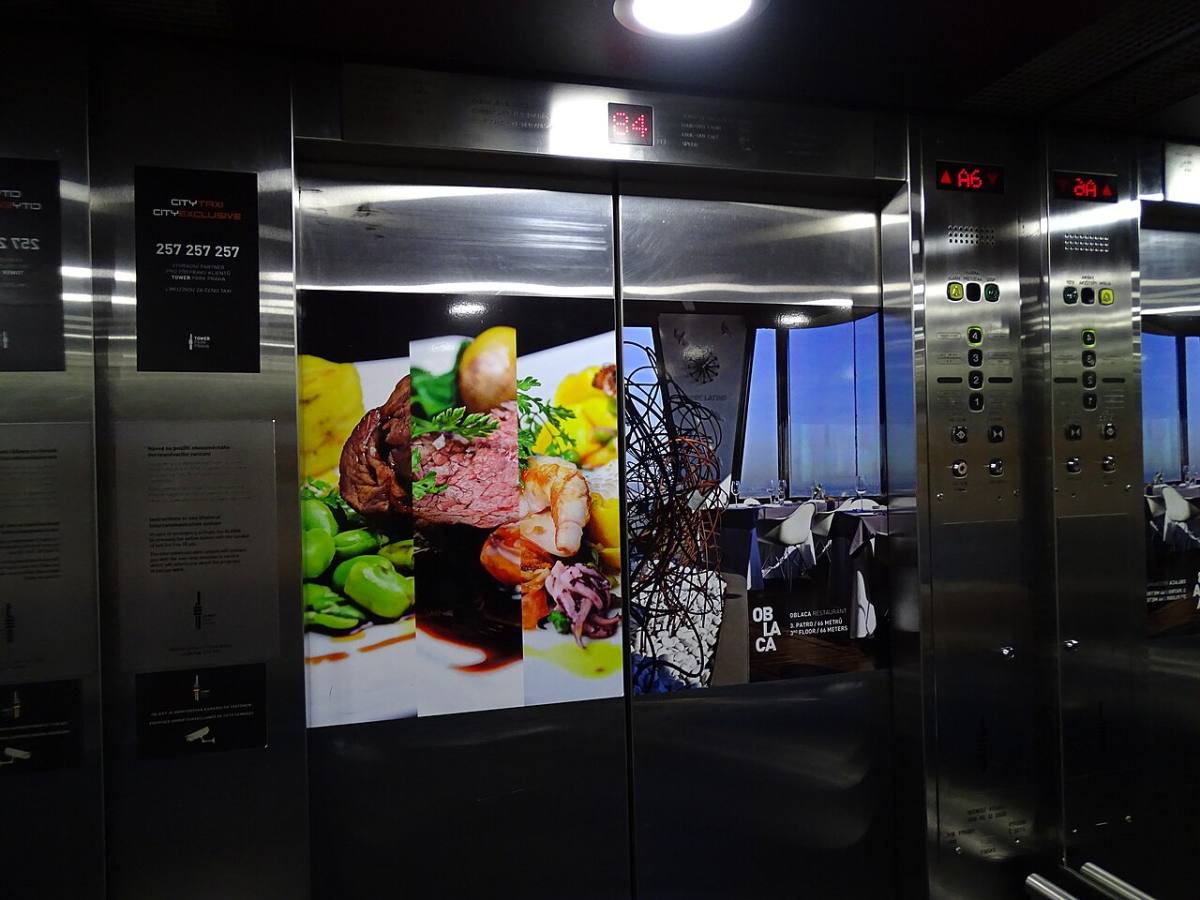
Image credits: Cover photo: Mori Tower Elevator by Syced, CC BY-SA 3.0; Picture in the text: Žižkov, vysílač, kabina výtahu 01.jpg) by ŠJů, CC BY 4.0. Pictures from Wikimedia Commons.

Share
Keep reading
Related articles
How Bicycle Gears Work: Chainrings, Cogs and Derailleurs
Bicycle gears change how far you travel per pedal turn. See how chainrings, cogs and derailleurs work, how a gear ratio is worked out, and what cross-chaining is.
How a Refrigerator Cools: The Four-Part Cycle
A fridge does not make cold. It moves heat from inside to your kitchen using a compressor, condenser, expansion valve and evaporator.