How ABS Brakes Stop Wheels From Locking Up
Anti-lock brakes release and reapply pressure many times a second so a wheel keeps turning. See the four parts, what the pedal pulse means and where ABS falls short.
In this article
An anti-lock braking system, or ABS, stops a wheel from locking during hard braking. A wheel that keeps turning keeps some grip, and a driver can usually keep steering. This article explains the parts, how the system spots a locking wheel, why the pedal pulses, and where the technology has limits.
The problem ABS solves
When you press a brake pedal hard, the brake pads or shoes slow each wheel. If the brake force is greater than the grip between tyre and road, the wheel stops turning while the car is still moving. The tyre then slides instead of rolling. A sliding front tyre cannot steer the car well, so the car carries on in a straight line whatever the steering wheel does.
Before ABS, a driver could avoid this by pumping the pedal: pressing, easing off when a wheel starts to lock, and pressing again. ABS does the same job automatically, at each wheel, and much faster than a person can.
The four main parts
According to the Wikipedia article on the system, an ABS has four main parts. The Drive, a motoring publication, describes the same set. They are:
- Wheel speed sensors, which measure how fast each wheel is turning. They are usually of the Hall-effect or variable-reluctance type, and Wikipedia notes they can become less accurate at very low wheel speeds.
- Valves, one on each brake line, that open, hold or release the fluid pressure going to a brake.
- A pump, which restores pressure after a valve has released it.
- A controller, a small computer (an ECU, or electronic control unit) that reads the sensors and commands the valves and pump.
The ordinary brake system, with its pedal, master cylinder, fluid lines, discs or drums, works as normal underneath. ABS adds control over it rather than replacing it.
How the system spots a locking wheel
The controller keeps comparing the speed of the wheels. If one wheel turns much more slowly than the car's speed, it is probably about to lock. The controller then tells that wheel's valve to reduce pressure. Once the wheel speeds up again, pressure is applied again. This cycle repeats while the driver keeps the pedal down.
Small differences are ignored, because wheels do turn at different speeds in a corner: the inner wheel travels a shorter path than the outer one. Wikipedia also notes that motorcycle systems watch for strong deceleration and for a set percentage of brake slip.
Why the pedal pulses
Because the valves open and close quickly, some of that movement reaches the pedal. Wikipedia says some systems can apply or release pressure up to 15 times a second. The Drive describes the result as a pulsing in the pedal, sometimes with mechanical noises, and says this is normal when ABS is working.
A short history
The idea is older than the car version. Wikipedia reports that in 1920 Gabriel Voisin tested flywheel-based brake control on aircraft and reported a 30% improvement in braking. In 1928 Karl Wassel patented a brake-modulating system but did not build a working product, and Robert Bosch filed a similar patent in 1936.
In the early 1950s Dunlop's Maxaret anti-skid system came into wide use in British aircraft. Mechanical systems for cars followed in the 1960s, including the Ferguson P99 and the Jensen FF, but they were expensive and unreliable. Wikipedia says the first fully electronic anti-lock system was developed for Concorde in the late 1960s.
The modern car system is credited to Mario Palazzetti of Fiat's research centre in 1971; Bosch bought the patent and named it ABS. In 1978 Mercedes-Benz offered a Bosch four-wheel ABS as an option on the W116 model. On two wheels, the BMW K100 of 1988 was the first motorcycle with electro-hydraulic ABS, and Wikipedia says its unit added about 11 kg.
Limits and faults
ABS helps drivers keep control, but it does not guarantee a shorter stop. The Drive says it does not always shorten stopping distances, even though cars with ABS often do stop shorter, and that it works best on wet and dry tarmac.
Wikipedia gives some research results. A 1999 study by the US National Highway Traffic Safety Administration found stopping distances on loose gravel rose by an average of 27.2%. A 2004 study from Monash University found ABS lowered multiple-vehicle crashes by 18% but raised run-off-road crashes by 35%. These are single studies from different places and years, so they should not be read as a verdict on ABS everywhere.
On very slippery surfaces several wheels can lock at the same moment, which confuses a system that works by comparing wheels. Bumpy ground can produce erratic wheel speeds that trigger the system, and some systems then enter a mode that limits braking force. The most common fault, according to Wikipedia, is a clogged valve. A fault normally switches on a dashboard warning lamp and turns ABS off, while the normal brakes keep working.
The short version
ABS is sensors, valves, a pump and a computer that keep a braking wheel just short of locking. It has been in cars since the 1970s and on motorcycles since 1988. It protects steering control rather than promising shorter stops, and it is one part of a larger brake and tyre system.
Sources
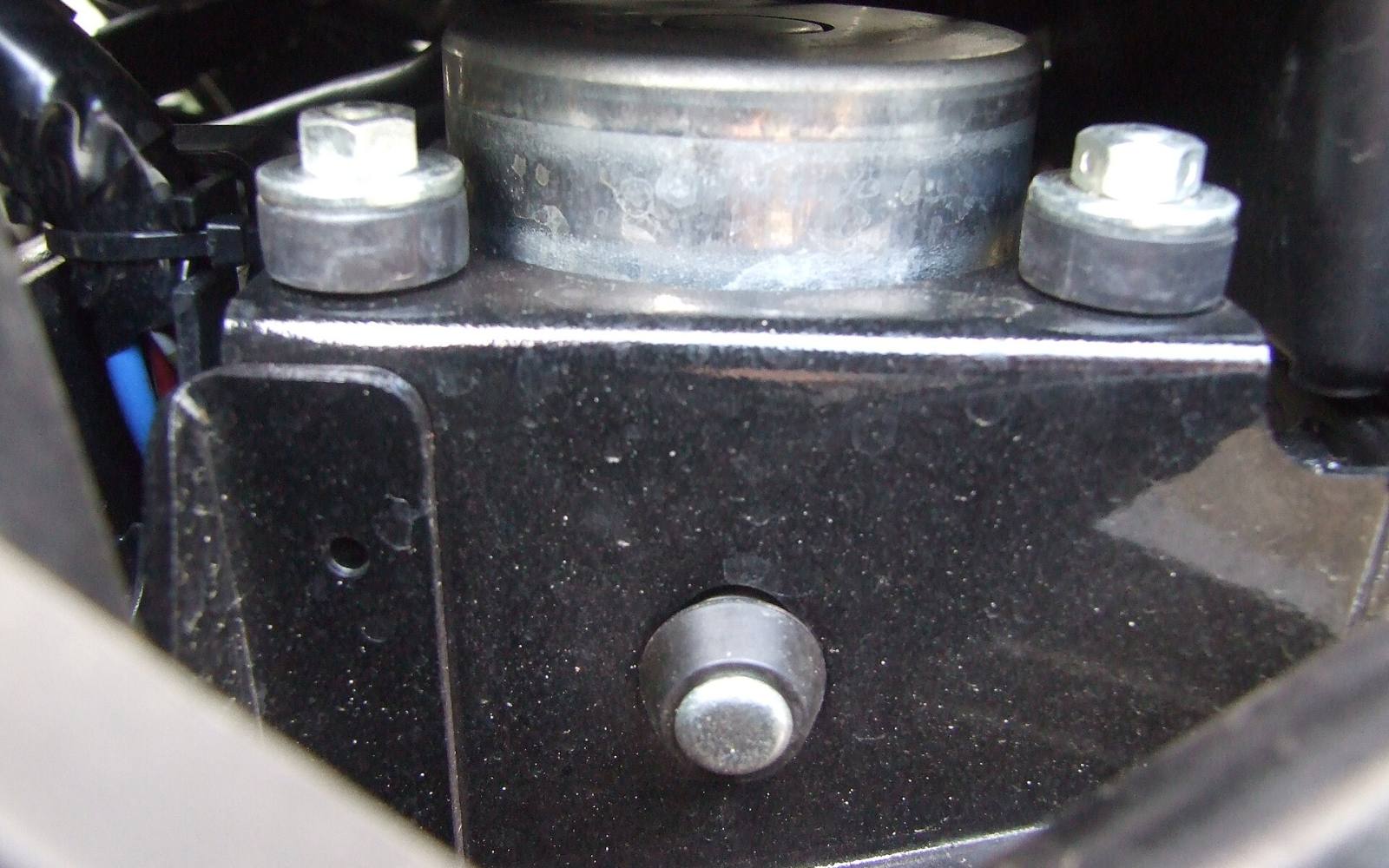
Image credits: Cover photo: Bosch ABS–8M by Beademung at de.wikipedia, CC BY-SA 3.0 de. Pictures from Wikimedia Commons.

Share
Keep reading
Related articles
What Regenerative Braking Does in Hybrids and EVs
Regenerative braking turns the motor into a generator while slowing, sending some energy back to the battery instead of wasting it as heat.
How a Turbocharger Works: Exhaust Power Made Useful
A turbocharger uses hot exhaust gas to spin a turbine that pushes extra air into an engine. Learn the parts, the lag, and where the idea came from.
How a Hybrid Car Works: Engine, Motor and Battery Explained
A hybrid pairs a petrol engine with an electric motor and a battery that charges itself while you drive. Here is what each part does, how braking recovers energy, and why it saves fuel.