How a Four-Stroke Engine Works: Intake to Exhaust
Most cars, motorcycles and light aircraft use a four-stroke engine. See what the piston does in each of the four strokes and why two turns of the crankshaft make one cycle.
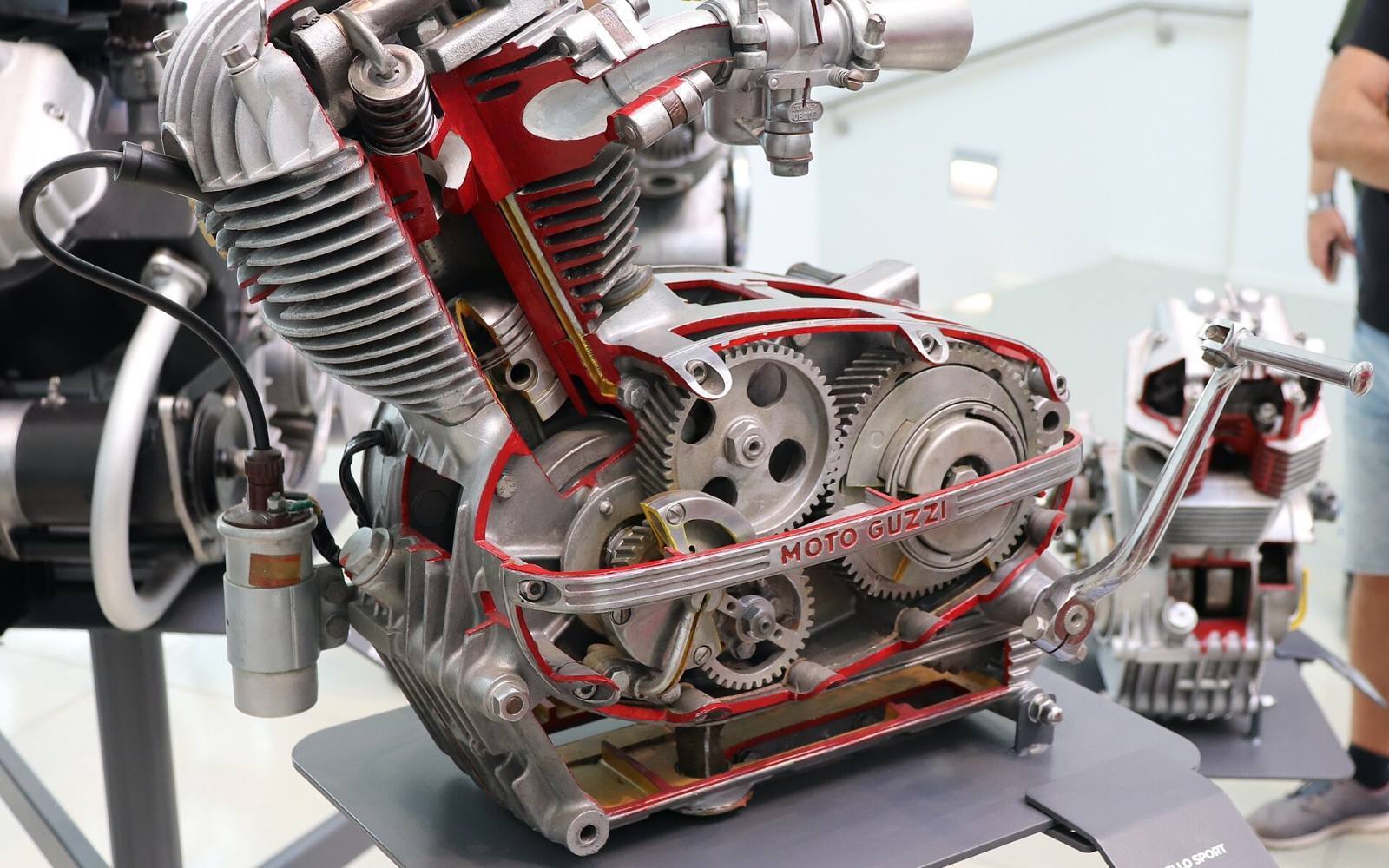
In this article
A four-stroke engine is an internal combustion engine in which each piston completes four separate strokes, in a fixed order, while turning the crankshaft. The four strokes are intake, compression, combustion (also called power) and exhaust. This design is the most common one for road transport, used in cars, trucks, diesel trains, light aircraft and motorcycles, according to the Wikipedia article on the four-stroke engine. This article explains each step in plain terms.
First, two words: stroke and cylinder
Inside the engine are one or more cylinders, which are round tubes. A piston, a close-fitting plug, slides up and down in each cylinder. A stroke is one full trip of the piston along the cylinder, either up or down. The two ends of that trip have names: top dead centre (TDC) at the highest point and bottom dead centre (BDC) at the lowest. The piston is joined to a crankshaft, which turns the up-and-down motion into rotation.
NASA's Glenn Research Center explains the idea with the engine of the Wright brothers' 1903 Flyer. That engine had four cylinders, each with a piston connected to a common crankshaft, and the crankshaft drove two propellers. NASA calls it a good engine for students to study because its design is simple by today's standards.
Stroke 1: intake
The piston starts at the top and moves down. The intake valve is open, and the downward motion creates a partial vacuum in the cylinder. This pulls in an air and fuel mixture in a petrol engine. The stroke ends when the piston reaches the bottom.
Stroke 2: compression
The piston now moves back up. Both the intake valve and the exhaust valve are closed, so the mixture is squeezed into a much smaller space. This prepares it for ignition in the next step. The stroke ends at the top.
Stroke 3: combustion, also called power
With the piston at the top and the mixture compressed, the fuel is ignited. In a petrol engine a spark plug does this. In a diesel engine the heat generated by compression itself ignites the fuel. The burning gas pushes the piston back down hard, and this is the only stroke that produces mechanical work to turn the crankshaft.
Stroke 4: exhaust
The piston travels up again, this time with the exhaust valve open. It pushes the burnt gas out through the exhaust port. The cycle then begins again with a new intake stroke.
Why more than one cylinder
Since only one stroke in four does the pushing, a single cylinder delivers its power in short bursts. Engines with several cylinders are arranged so that the power strokes fall at different times, and all the pistons are connected to the same crankshaft, as in the Wright engine with its four cylinders. This evens out the delivery of power.
Where the design came from
According to Wikipedia, Nicolaus Otto realised in the 1860s that compressing the fuel charge before ignition mattered. The earlier Lenoir engine of 1860, which ran on illuminating gas, reached only 4 per cent efficiency. By 1876 Otto and Eugen Langen had built the first internal combustion engine that compressed the mixture before combustion, with far higher efficiency. Gottlieb Daimler and Wilhelm Maybach then developed a high-speed Otto engine in 1883, and in 1885 produced a vehicle with one, the Daimler Reitwagen. In 1886 Karl Benz produced a four-stroke automobile that Wikipedia says is regarded as the first car.
Variations on the cycle
Not every four-stroke engine runs the plain Otto cycle. The Atkinson cycle, invented by James Atkinson in 1882, trades power density for efficiency by making the power stroke longer than the compression stroke. Wikipedia says the original design is a historical curiosity, but many modern engines use unusual valve timing to get a similar effect, and the cycle is used in some hybrid cars. The main alternative to the four-stroke design is the two-stroke cycle, and six-stroke engines have been studied and some have been built.
Quick summary
- Intake: the piston goes down, a valve opens and air or an air-fuel mixture enters
- Compression: the piston goes up with the valves closed and squeezes the mixture
- Combustion: the mixture is ignited by a spark (petrol) or by the heat of compression (diesel), and the piston is pushed down
- Exhaust: the piston goes up with the exhaust valve open and pushes out the burnt gas
This is general information about how the engine cycle works. Details such as valve timing, fuel injection and turbocharging differ between engines and are covered in other articles on this site.
Sources
Image credits: Cover photo: Moto Guzzi Stornello Sport 125 engine cutaway by CheminduCret, CC0. Pictures from Wikimedia Commons.

Share
Keep reading
Related articles
Diesel vs Petrol Engines: Spark or Squeeze?
Petrol engines light their fuel with a spark; diesel engines light it by squeezing air until it is hot. Here is what that one difference changes.
How a Car Cooling System Keeps an Engine at Temperature
A pump, radiator, thermostat and pressurised coolant work together to shed engine heat. Here is what each part does and why the mix and pressure matter.
How a Turbocharger Works: Exhaust Power Made Useful
A turbocharger uses hot exhaust gas to spin a turbine that pushes extra air into an engine. Learn the parts, the lag, and where the idea came from.